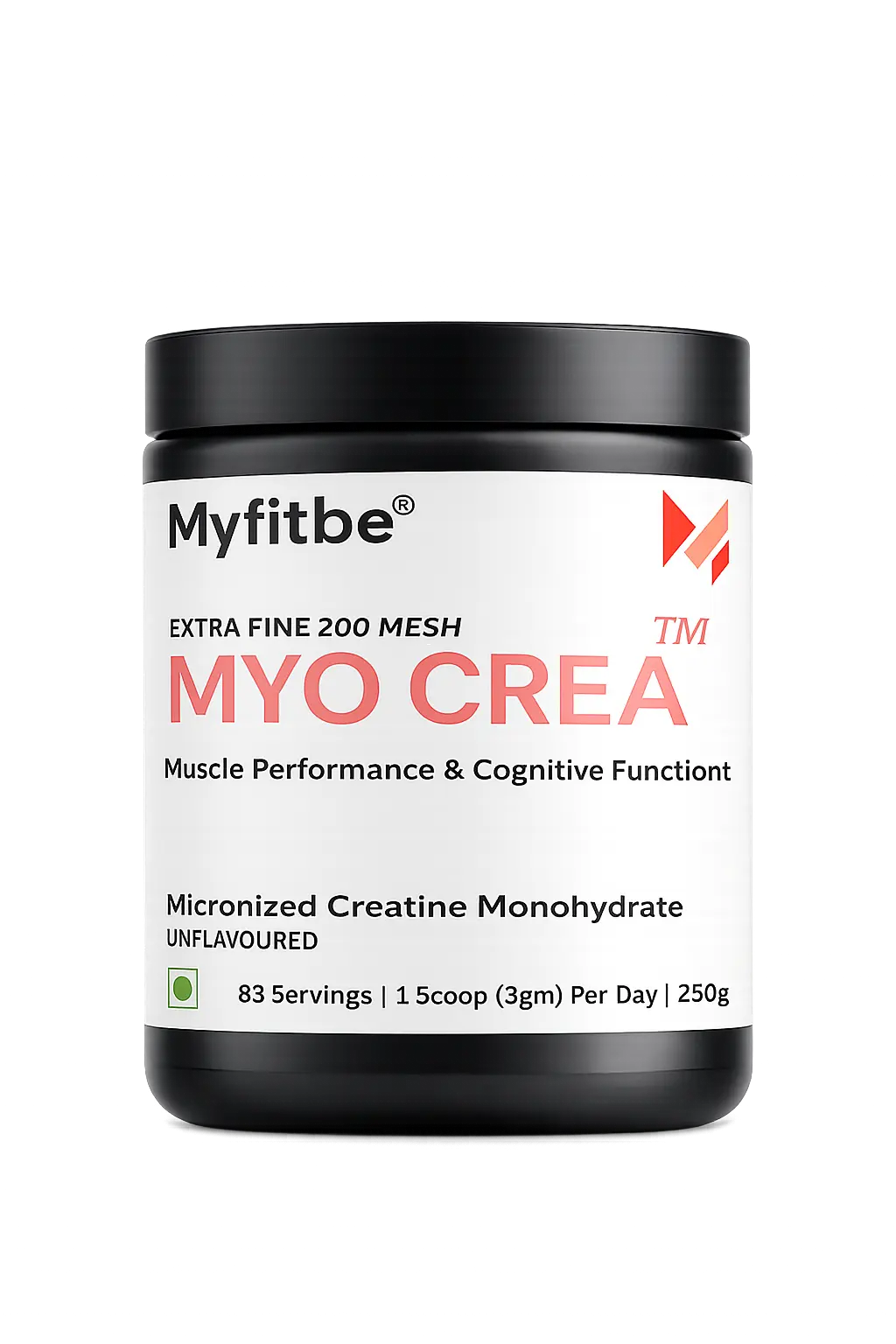

MYO CREA™ — Creatine Monohydrate
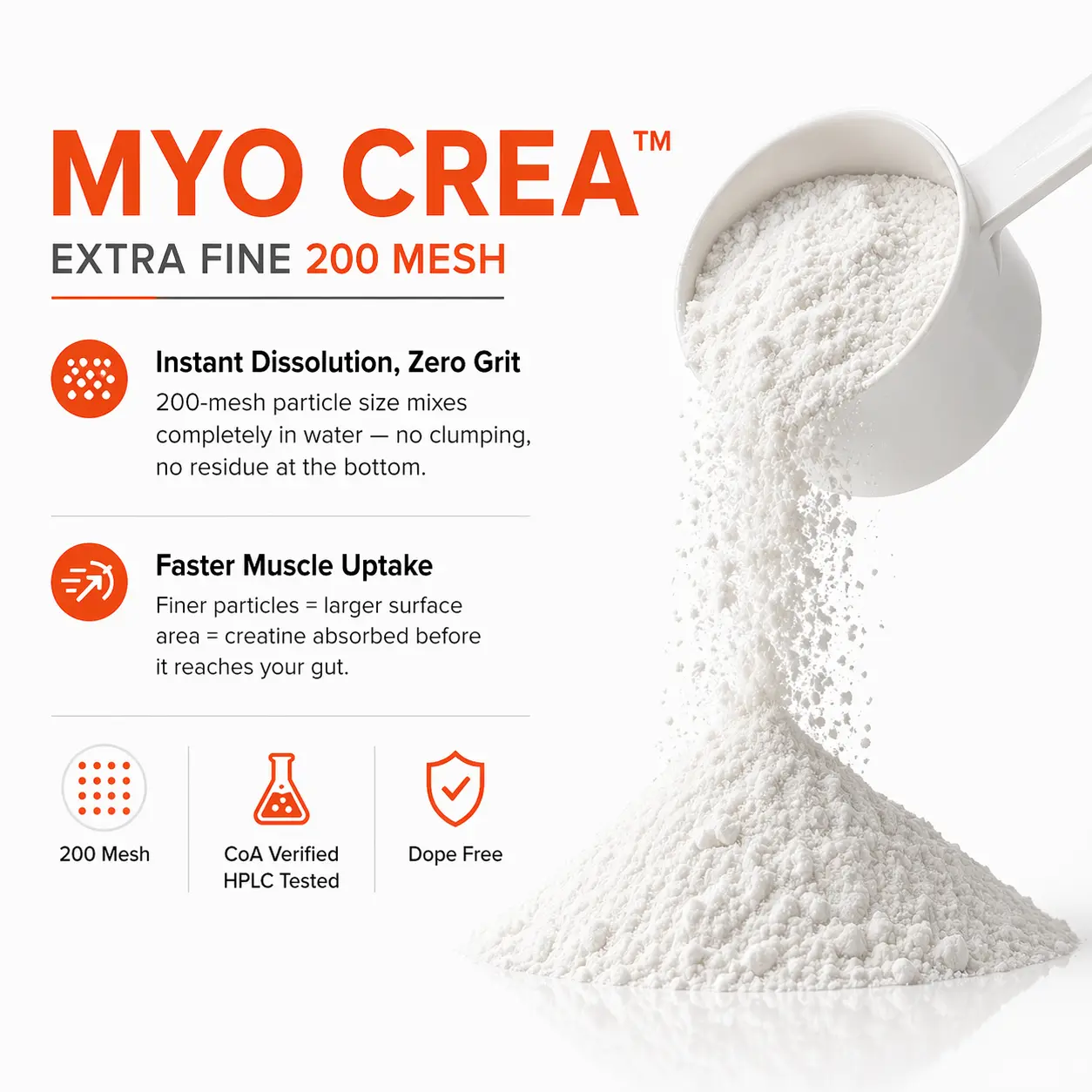
Micronized Mesh 200 | Fast Absorption
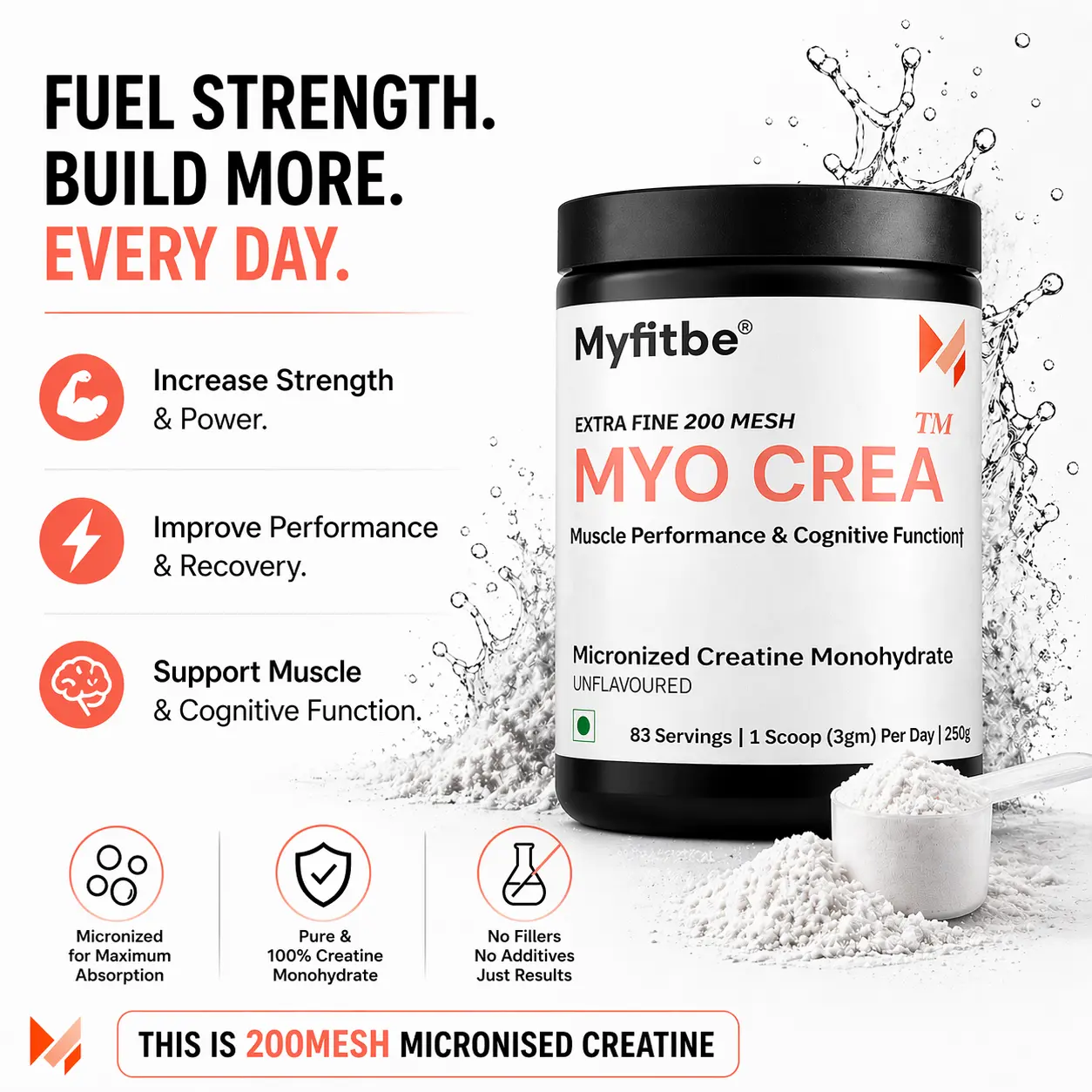
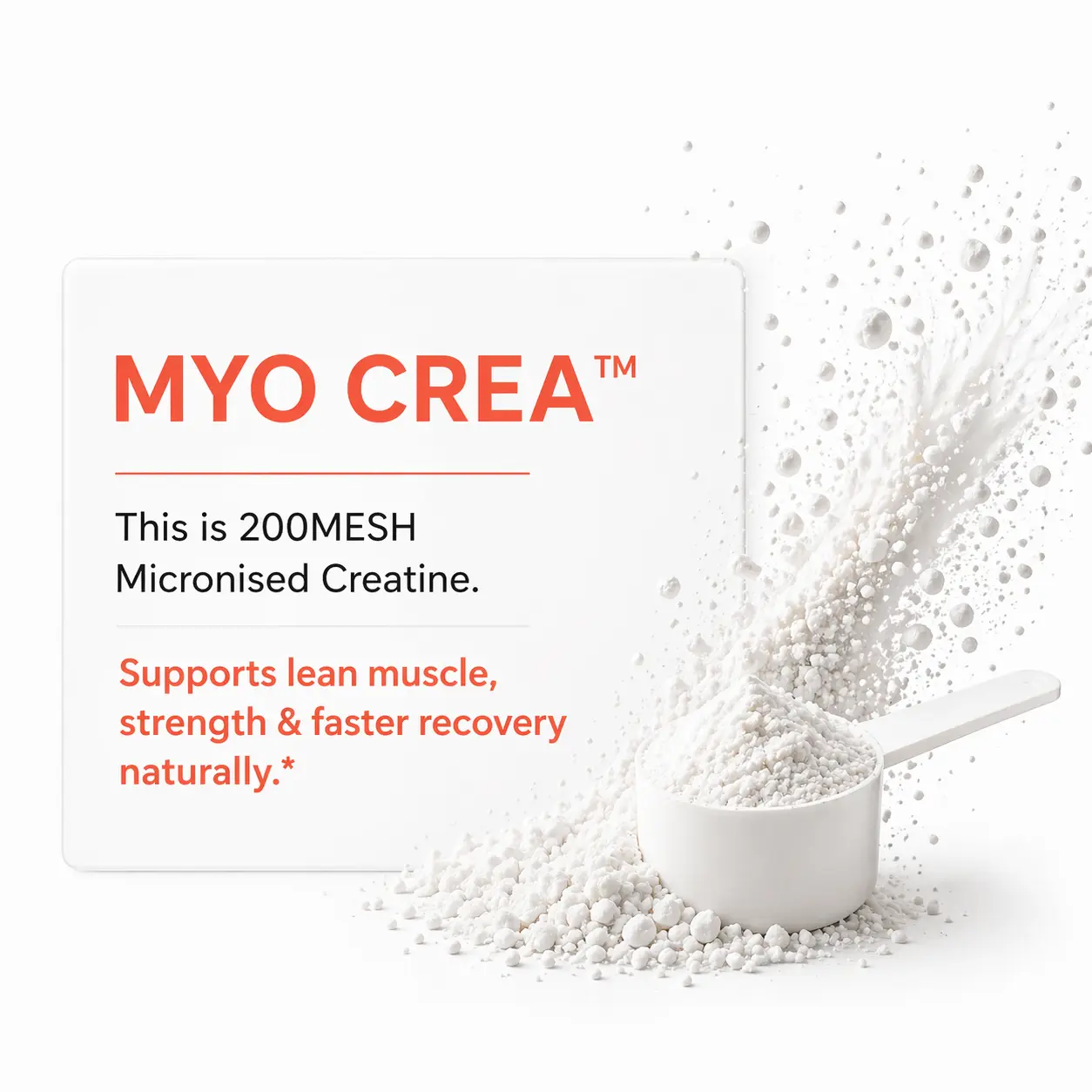
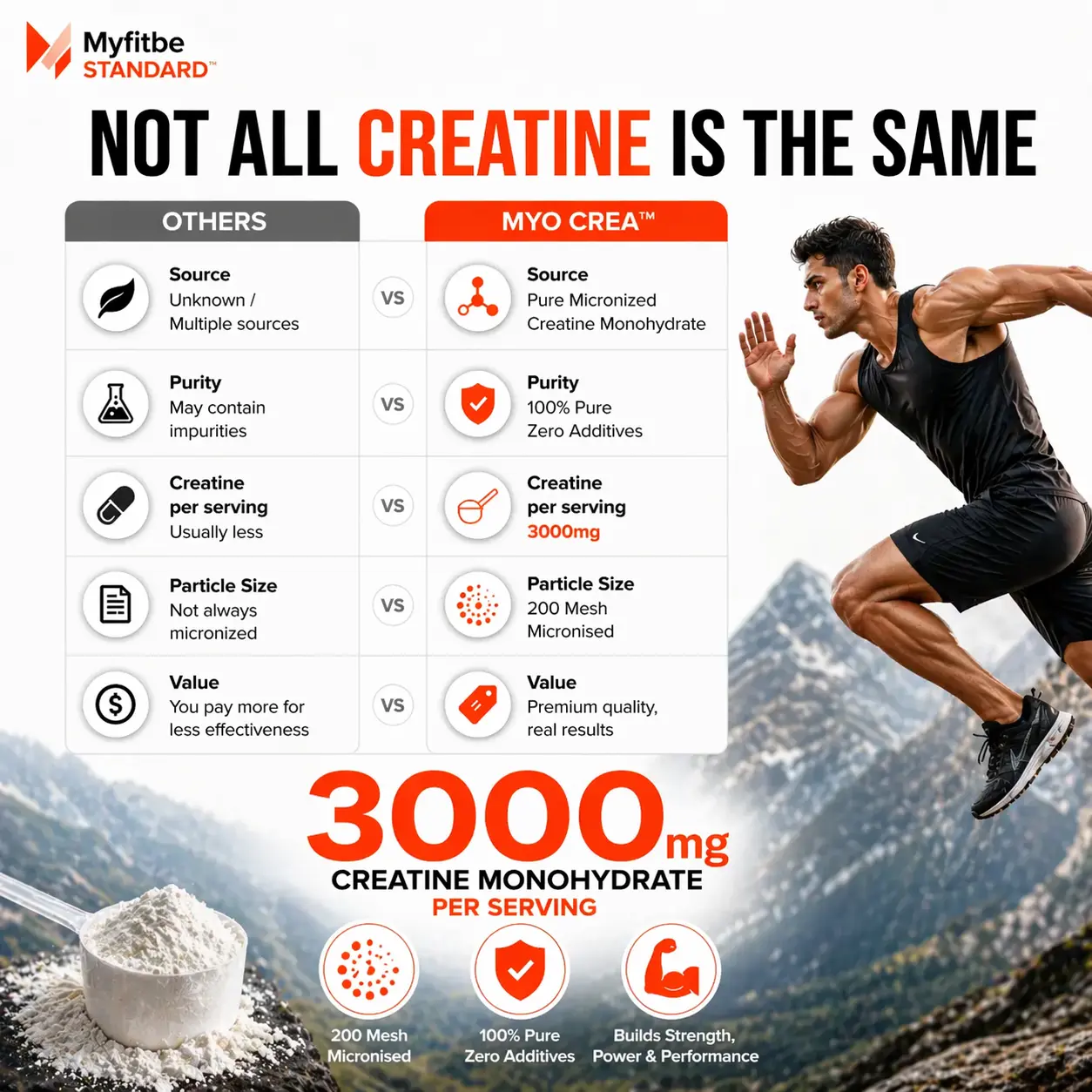
MYO CREA™ is the ultimate sport and health booster. Sourced by trusted chemical companies, this 100% pure micronized creatine monohydrate (Mesh 200) ensures maximum solubility and rapid absorption to fuel strength, muscle mass, and cognitive resilience.
SERVING SIZE
250g Powder
DOSE PROTOCOL
3g (1 Scoop)
PHYSIOLOGICAL MECHANISM
100% pure micronized creatine monohydrate mesh 200 for best solubility and immediate absorption.
Check Delivery Speed
Mechanism of Action
Explore the active compounds, molecular kinetics, and physiological targets engineered into this formulation.
Cellular Energy & ATP Formation
Creatine supplements increase your muscles’ phosphocreatine stores. Phosphocreatine aids the formation of adenosine triphosphate (ATP), the key molecule your cells use for energy and all basic life functions.
During exercise, ATP is broken down to produce energy. The rate of ATP resynthesis limits your ability to continually perform at maximum intensity, as you use ATP faster than you reproduce it.
Creatine supplements fuel your muscles during high-intensity exercise by allowing you to produce more ATP energy, drastically improving ballistic power and sprint ability.
Physiological Pathway Chart
Advanced Muscle Growth Pathways
Creatine is a popular and effective supplement for adding muscle mass. It can alter numerous cellular pathways, such as boosting the formation of proteins that increase the size of muscle fibers.
It can also raise levels of insulin-like growth factor 1 (IGF-1), a hormone that promotes increases in muscle mass, and increase water content through cell volumization.
Additionally, research indicates that creatine decreases levels of myostatin, a molecule responsible for stunting muscle growth, helping you build muscle faster.
Physiological Pathway Chart
High-Intensity Performance Engine
Creatine’s direct role in ATP production improves numerous factors including strength, ballistic power, sprint ability, muscle endurance, and resistance to fatigue.
Unlike other supplements, creatine provides benefits regardless of fitness level. One review found that it improves high-intensity exercise performance by up to 15%.
According to the ISSN, taking it for as few as 5–7 days has been shown to significantly increase lean body weight and muscle size.
Physiological Pathway Chart
Neurological & Cognitive Support
A key factor in several neurological diseases is a reduction of phosphocreatine in your brain. Since creatine can increase these levels, it may help reduce or slow disease progression.
In Parkinson’s, combining creatine with weight training improved strength and daily function to a greater extent than training alone.
Research also suggests potential benefits against Alzheimer’s, ischemic stroke, epilepsy, and ALS by maintaining daily function and reducing cell death.
Physiological Pathway Chart
Metabolic Control & Blood Sugar
Research suggests that creatine may lower blood sugar levels by increasing the function of glucose transporter type 4 (GLUT-4), a molecule that brings blood sugar into your muscles.
A 12-week study showed that people who combined creatine and exercise exhibited better blood sugar control after a high-carb meal than those who only exercised.
While promising, more human research is needed on creatine’s long-term effects on blood sugar control and diabetes risk.
Physiological Pathway Chart
Brain Health & Intelligence
Your brain requires a significant amount of ATP when performing difficult tasks. Supplements increase phosphocreatine stores in your brain to help it produce more ATP.
One study found a 20–50% improvement in some memory and intelligence test scores in vegetarians taking creatine. For older individuals, it significantly improved memory and recall ability.
In older adults, creatine may boost brain function, protect against neurological diseases, and reduce age-related loss of muscle and strength.
Physiological Pathway Chart
Fatigue Reduction & Energy Levels
Creatine supplements may reduce fatigue and tiredness. In studies of traumatic brain injury, patients experienced a 50% reduction in dizziness compared to controls.
Only 10% of patients in a supplement group experienced fatigue during sleep deprivation, compared to 80% in the control group.
Creatine also reduced fatigue in athletes and has been used to decrease fatigue when exercising in high heat.
Physiological Pathway Chart
100% Pure Micronized Mesh 200
MYO CREA™ is 100% pure micronized creatine monohydrate mesh 200 for best solubility and absorption. Zero added flavors or fillers.
Researched for over 200 years, clinical trials lasting up to 5 years report no adverse effects in healthy individuals. It is one of the cheapest and safest supplements available.
Simply take 3–5 grams (one scoop) of powder per day mixed with 120ml of water.
Physiological Pathway Chart
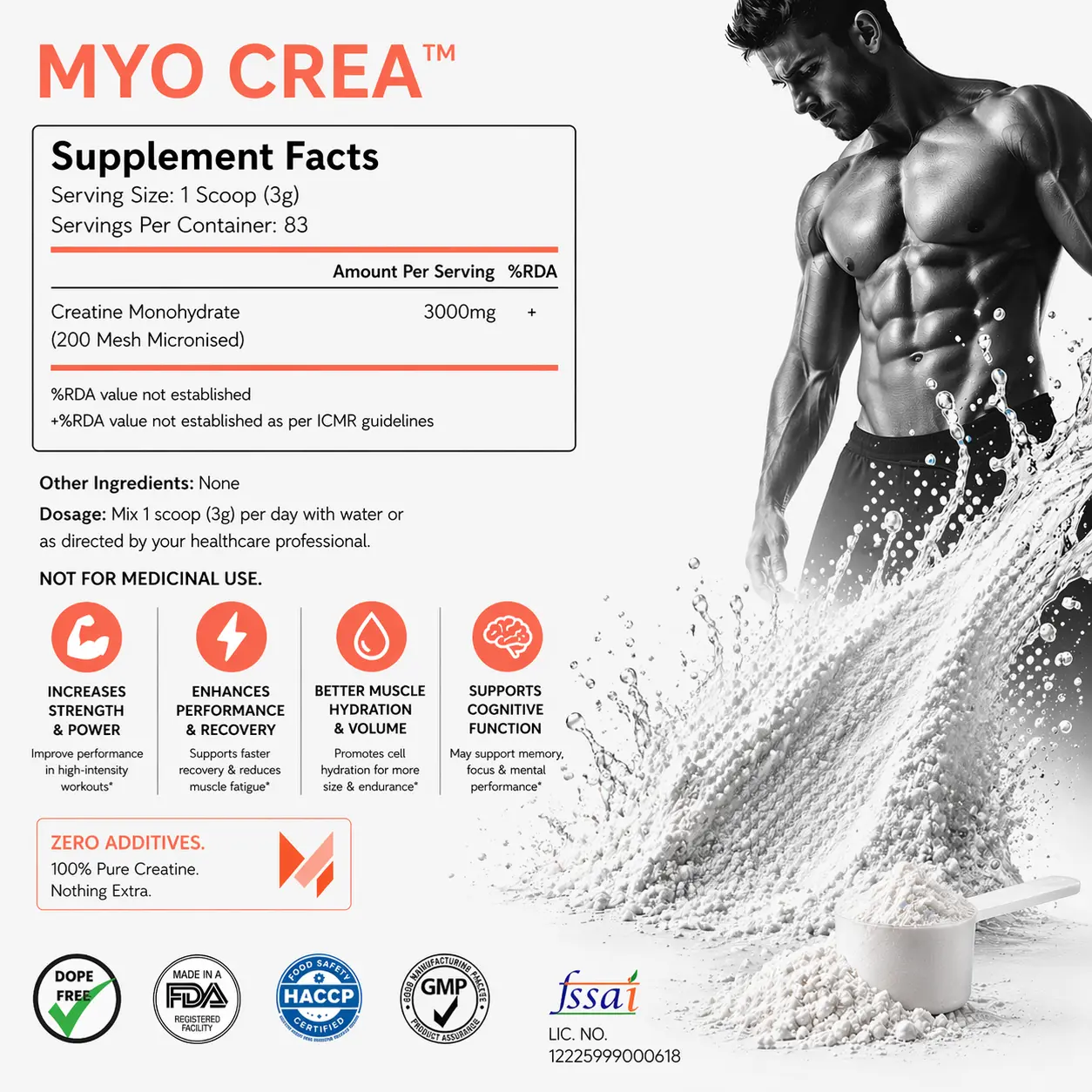
Supplement Facts
Serving Size: 1 Scoop (3g)
Servings Per Container: 83
Other Ingredients: None
Dosage & Directions: Mix 1 scoop (3g) per day with water or as directed by your healthcare professional.
State-Of-The-Art Lab Testing
Every single lot of Myfitbe supplements is verified for active purity, bioavailability, and zero heavy metal contamination.






Athletics Event Guide
Select your athletic event to explore targeted physiological impact and clinical studies.
Directly saturates intramuscular phosphocreatine (PCr) pools, facilitating instantaneous ATP regeneration during max-velocity sprint events (100m, 200m, 400m). Saves critical split seconds.
"Branch, J. D. (2003). "Effect of creatine supplementation on body composition and performance: a meta-analysis." Journal of the American Dietetic Association, 103(6), 723-731."
Verify on PubMed↗Verified Evidence
Community
Validation.
Based on 0 reviews