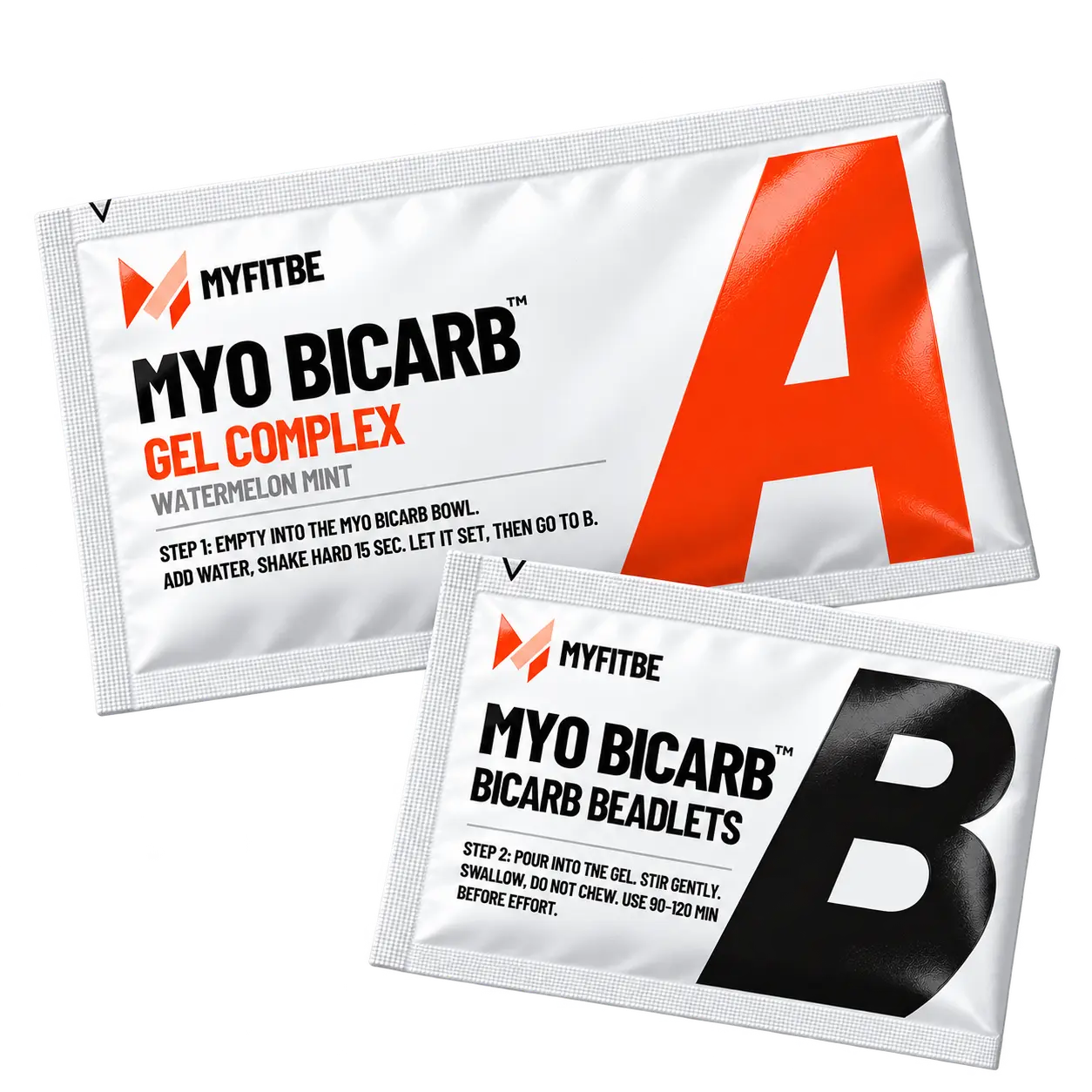
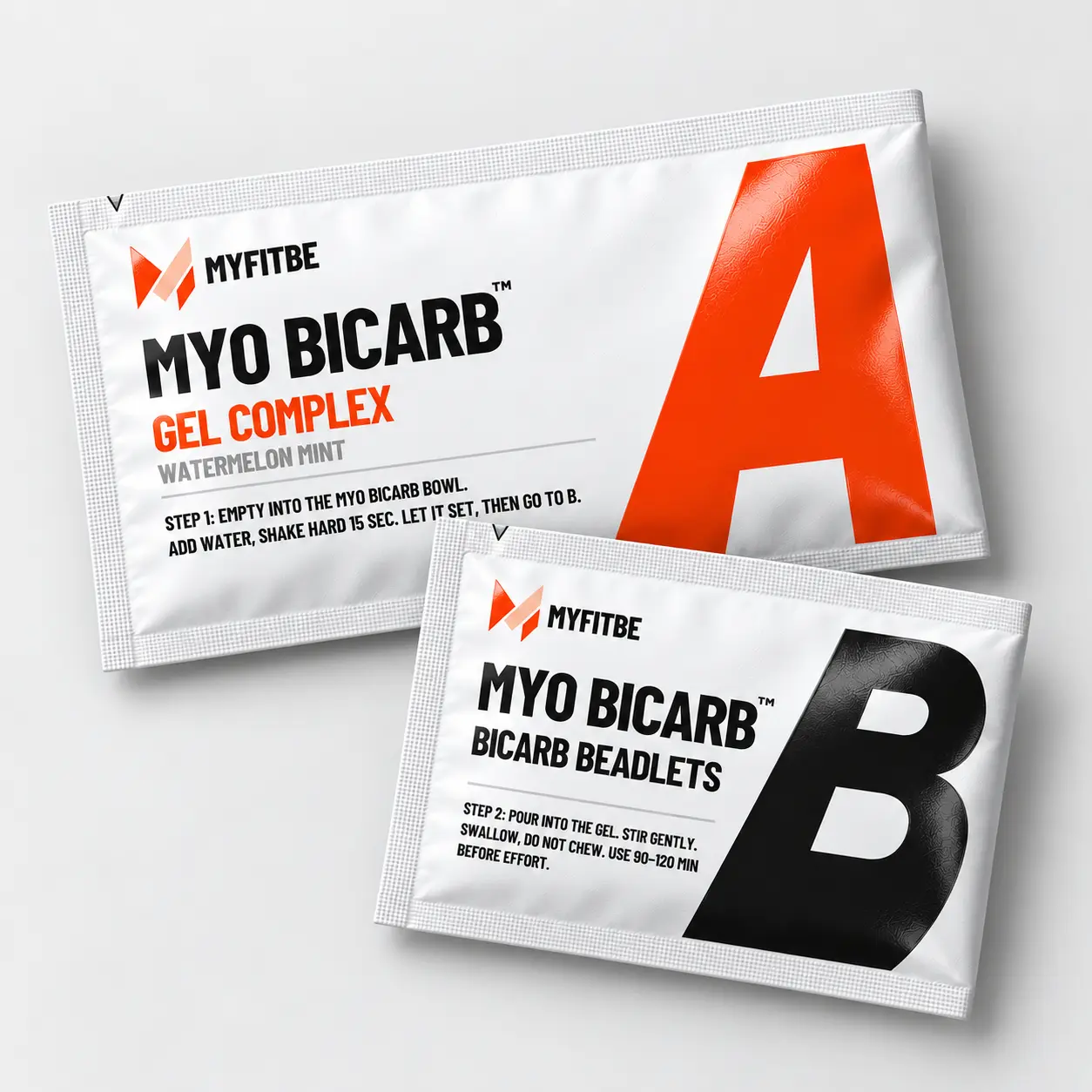
MYO BICARB™ — Sodium Bicarbonate System
Advanced Lactic Acid & H⁺ Buffer | High-Intensity Performance
MYO BICARB™ is an advanced sodium bicarbonate hydrogel buffering system engineered for elite athletic output. Designed to significantly increase systemic blood bicarbonate and buffer hydrogen ions (H⁺) during high-intensity, anaerobic efforts — delaying muscular acidosis and fatigue without gastrointestinal distress.
SELECT DOSAGE
SERVING SIZE
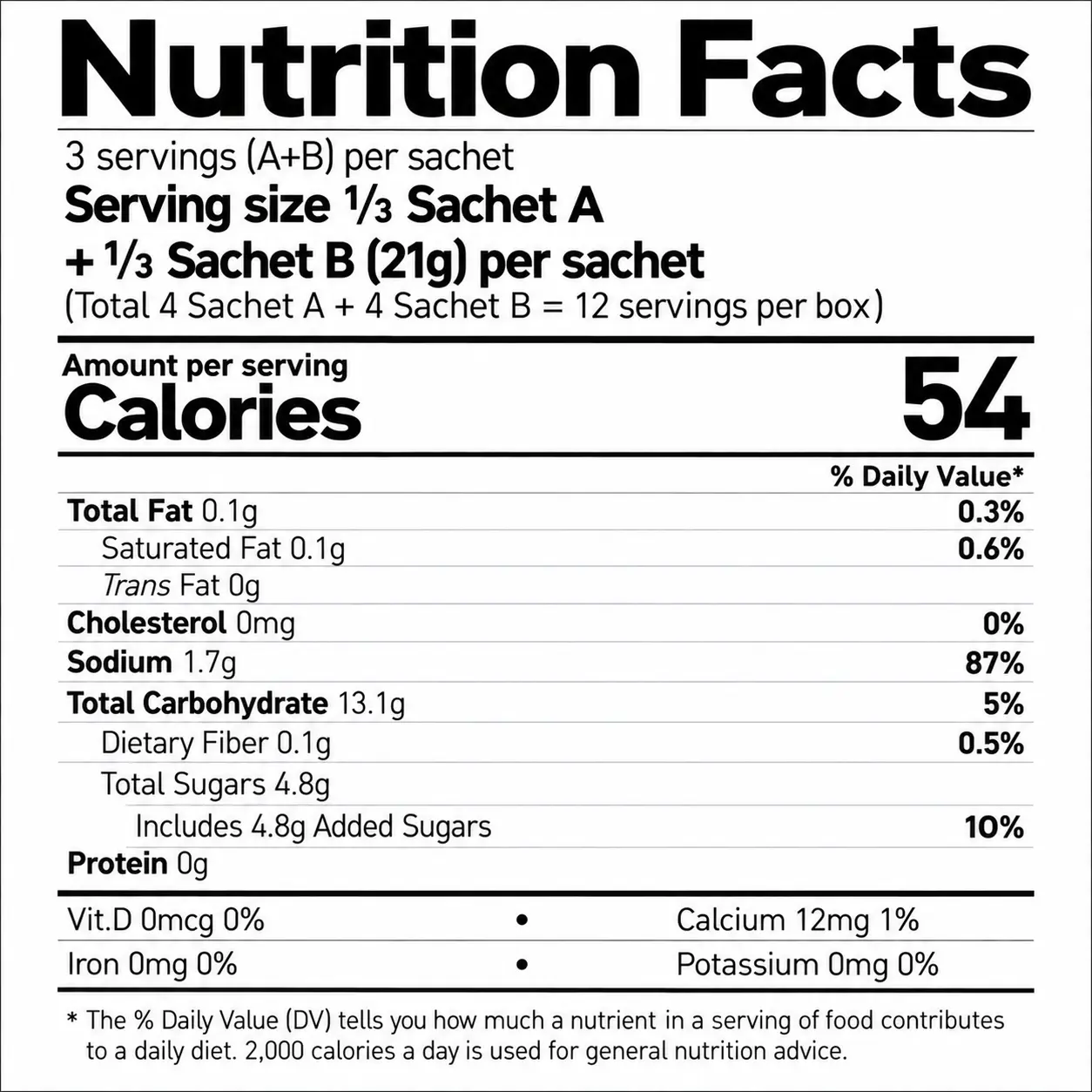
4 Servings System
DOSE PROTOCOL
1 Serving System (Bicarb + Hydrogel Base)
PHYSIOLOGICAL MECHANISM
Encapsulates active sodium bicarbonate in a specialized alginate-pectin hydrogel matrix to smoothly bypass stomach acid and absorb directly in the intestine, elevating systemic blood bicarbonate while eliminating gastrointestinal discomfort.
Check Delivery Speed
Mechanism of Action
Explore the active compounds, molecular kinetics, and physiological targets engineered into this formulation.
The Physiology of Muscular Acidosis & H⁺ Buffering
During supramaximal exercise (lasting 30 seconds to several minutes), rapid anaerobic glycolysis produces high concentrations of lactate and hydrogen ions (H⁺), dropping intramuscular pH from 7.1 down to ~6.5.
This cellular acidosis impairs phosphofructokinase (PFK) enzyme activity, inhibits calcium release from the sarcoplasmic reticulum, and directly reduces cross-bridge cycling force.
MYO BICARB™ delivers high-dose bicarbonate into systemic circulation, creating a steep extracellular-to-intracellular pH gradient that draws excess protons out of active muscle fibers and neutralizes them into CO₂ and water.
Physiological Pathway Chart
Hydrogel Encapsulation: Eliminating GI Distress
Traditional sodium bicarbonate reacts violently with stomach hydrochloric acid (HCl), generating rapid carbon dioxide gas that causes severe nausea, bloating, cramps, and osmotic diarrhea.
MYO BICARB™ utilizes a biopolymer hydrogel matrix (sodium alginate and pectin). When mixed with water and consumed, it forms a protective barrier in the low-pH stomach environment.
The micro-tablets transit intact through the stomach and dissolve smoothly in the alkaline environment of the small intestine, releasing active bicarbonate for painless absorption.
Physiological Pathway Chart
Extending Time-to-Exhaustion at Maximal Power
Meta-analyses across hundreds of sports science trials confirm that pre-exercise sodium bicarbonate supplementation provides a 2% to 3% improvement in high-intensity exercise capacity and time-to-exhaustion.
In competitive athletics, a 2% margin translates to 1–2 full seconds over 400m/800m, dozens of meters in rowing or cycling time trials, and multiple extra repetitions in repeat-sprint sports.
Athletes report being able to maintain their target pace and stroke cadence without the debilitating "lock-up" sensation in the final 20–30% of their event.
Physiological Pathway Chart
The Final Kick: Preserving Neuromuscular Wattage
Championship races are won in the closing stages. When muscular acidosis is buffered, calcium sensitivity in the troponin-tropomyosin complex is preserved, allowing myofibrils to continue generating maximal tension.
MYO BICARB™ prevents the premature loss of motor unit recruitment, giving athletes the physiological reserve to execute a powerful finishing kick or surge.
Whether sprinting to the tape in a 1500m final or attacking on the final climb of a bike race, buffering capacity dictates sprint velocity under heavy lactate accumulation.
Physiological Pathway Chart
Precision Pre-Race Dosing & Timing Protocol
Peak blood bicarbonate (HCO₃⁻) and base excess occur between 90 and 120 minutes following ingestion of the hydrogel bicarb system.
Mix the hydrogel sachet with 200ml of cold water in a bowl. Gently stir in the bicarb micro-tablets without chewing or crushing them, and swallow with a spoon.
Take 90 to 120 minutes before your competition or key threshold interval session. Drink an additional 300–500ml of water to optimize systemic hydration.
Physiological Pathway Chart
Multi-Pathway Ergogenic Synergy: Stack Protocols
Sodium Bicarbonate is the primary extracellular buffer, while Beta-Alanine (Carnosine) functions as the key intracellular buffer.
Stacking MYO BICARB™ with MYO CREA™ (for PCr replenishment) and MYO MAG™ (for neuromuscular firing and relaxation) creates an unyielding biochemical foundation across ATP, phosphagen, and buffering systems.
This multi-pathway synergy ensures maximum power generation, rapid proton expulsion, and seamless cellular recovery between consecutive heats or stages.
Physiological Pathway Chart
Cellular pH Homeostasis & Enzyme Protection
Key enzymes including Phosphofructokinase (PFK), Glycogen Phosphorylase, and Lactate Dehydrogenase have narrow pH operating windows. Acidic environments drastically reduce their enzymatic rate.
By buffering systemic H⁺, MYO BICARB™ preserves optimal enzymatic turnover rates, enabling muscles to sustain high glycolytic flux throughout prolonged maximum-effort sets.
This protects muscle cells from oxidative stress and accelerated structural breakdown during exhaustive anaerobic training sessions.
Physiological Pathway Chart
Elite Competition Validation: From Track to World Tour
Sodium bicarbonate is classified as an approved, evidence-backed Tier-1 performance supplement by the International Olympic Committee (IOC) and the Australian Institute of Sport (AIS).
From 400m/800m track specialists and world-record swimmers to Tour de France peloton climbers and elite rowers, bicarb hydrogel systems represent the gold standard in competitive endurance and speed science.
MYO BICARB™ delivers this world-class technology with zero banned substances, batch-tested purity, and unmatched gastric comfort.
Physiological Pathway Chart
Athletics Event Guide
Select your athletic event to explore targeted physiological impact and clinical studies.
Amplifies extracellular buffering capacity during 200m, 400m, and sprint repeats, drawing excess H⁺ out of fast-twitch myofibrils to sustain peak velocity through the line.
"Carr, A. J. et al. (2011). "Effect of sodium bicarbonate on [HCO3-], pH, and gastrointestinal symptoms." International Journal of Sport Nutrition and Exercise Metabolism, 21(3), 189-194."
Verify on PubMed↗Verified Evidence
Community
Validation.
Based on 0 reviews