In the hierarchy of human performance, sleep is the indisputable foundation. It is the only physiological state where the glymphatic system actively clears metabolic waste from the brain and where growth hormone secretion reaches its peak levels. Yet, for many, high-quality sleep remains elusive. MYO MAG™ was engineered to solve this by leveraging the specific neurological pathways of Magnesium Bisglycinate to optimize the sleep-recovery window.

Deep Recovery: Activating the parasympathetic nervous system for restorative sleep.
The GABA-ergic Connection: Your Neurological Dimmer Switch
Magnesium plays a critical role in the nervous system as a natural antagonist of the NMDA receptor and a powerful agonist for GABA (gamma-aminobutyric acid). GABA is the primary inhibitory neurotransmitter in the brain—it’s responsible for "calming down" neural activity.
When you take high-bioavailability magnesium before bed, it binds to GABA-A receptors, effectively acting as a neurological dimmer switch. This facilitates the crucial transition from Stage 1 sleep into the restorative Deep Sleep (SWS) and REM (Rapid Eye Movement) cycles. Without sufficient magnesium, the brain remains in a state of hyper-excitability, leading to fragmented sleep and poor morning alertness.
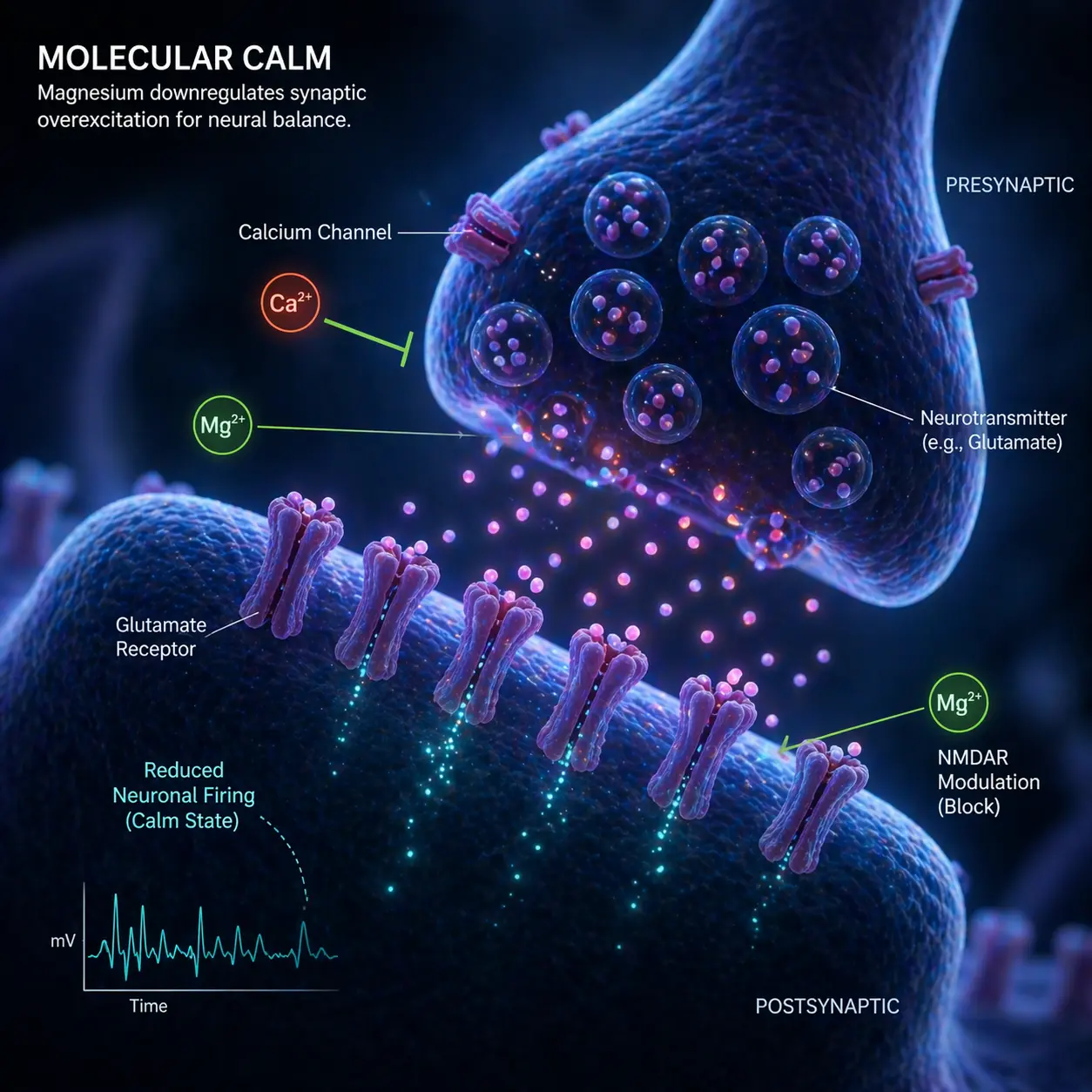
Molecular Calm: Visualizing the synaptic downregulation triggered by magnesium.
Chelation Science: Why Bisglycinate is Superior
The most common form of magnesium found in drugstores is Magnesium Oxide. Unfortunately, it has a bioavailability as low as 4%, meaning most of it stays in the gut and acts as an osmotic laxative. To avoid this, MYO MAG™ uses Magnesium Bisglycinate—where magnesium is chelated (bound) to two molecules of Glycine.
Glycine is an amino acid that independently crosses the blood-brain barrier and has its own calming effects. Furthermore, glycine helps regulate core body temperature—a drop in core temperature is one of the primary biological triggers for sleep onset. By combining these two molecules, we maximize absorption and provide a dual-action mechanism for relaxation.
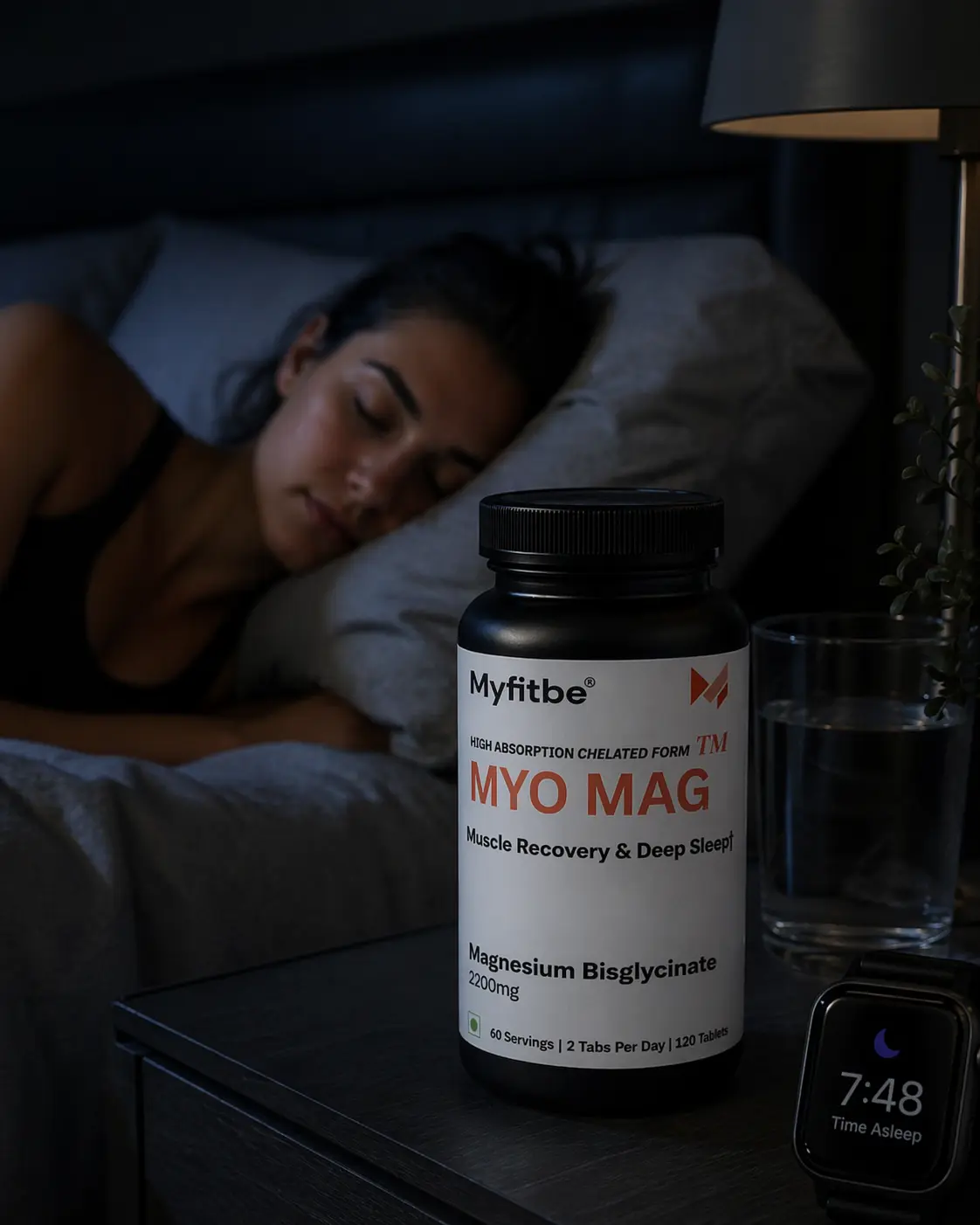
The Recovery Window: Maximizing the efficiency of the REM and Deep Sleep cycles.
"Magnesium plays a pivotal role in the regulation of the sleep-wake cycle through its influence on the circadian rhythm and its regulation of melatonin production." — Journal of Research in Medical Sciences
Maximize Your Recovery Protocol:
- Timing: Consume Magnesium Bisglycinate 30-45 minutes before your intended sleep time.
- Dosing: Clinical benefits for sleep are typically seen at doses between 200mg and 400mg of elemental magnesium.
- Environment: Pair your supplementation with a cool, dark room to leverage the core temperature benefits of glycine.
True recovery isn't just about the absence of training; it's about the presence of the right biological signals. By optimizing your magnesium levels, you are giving your body the permission it needs to descend into the deep, restorative states required for elite performance.
The Myfitbe Editorial Board
Peer-reviewed clinical content